User Centered Design
Shifting attitudes toward insect protein
Industry
Service design, sustainability
Duration
10 weeks
Role
UX Researcher & designer
Skills
User research, product design
Context
Insect-based proteins offer a sustainable solution to global food challenges.
The way we produce food is reaching a breaking point. By 2050, it is estimated that the population will be nearly 9.7 billion people. This rise in population will inevitably put an enormous pressure on how we source protein (Castro-Alija et al., 2024). Traditional livestock farming simply can't keep up without harming the planet. To move forward, we need fresh, sustainable solutions that can nourish both people and the environment.
Challenge
Ew, why insects?
Most people don’t have a great perception of insects because of personal experiences or media portrayal. With the rise of AI and fast fashion, we see more attachment to ease of use and instant gratification. People want instant solutions to their problems, often at the expense of sustainability.
However, crickets require only 1.7 kg of feed to produce 1 kg of biomass, compared to 10 kg for beef (Conway & Jaiswal, 2024). Insects are nutrient-rich, providing high-quality protein, up to 70% lipids with a favorable fatty acid profile and essential vitamins and minerals (Giampieri et al., 2022).
Solution
What did we do?
As part of the HCDE User Centered Design class, I collaborated with a team of students to conduct research and create a design solution that would combat climate crisis.
What methods were involved?
The study was conducted over 10 weeks, involving 8 participants → including 4 interviews and 4 co-design sessions with diverse participants.
1. Secondary research: we did literature reviews and conducted a competitive analysis to recognize the strengths and weaknesses of existing products.
2. Survey: we sent out an initial survey to gather insights about food preferences and gauge exposure to alternative foods including insect based foods.
3. Co-design: we wanted to enforce trust & adoption, hence we wanted to make sure that our users had a part in designing an equitable outcome.
4. In-depth interviews: qualitative feedback helped us understand users pain points in greater detail.
5. User testing: the most important step of the process! Once we created our product, we tested it with users and iterated on the designs to make sure we were creating an user centered solution.
Impact
My role
... as a UX designer/researcher from egg to exoskeleton
Through this project I had the opportunity to recruit participants, conduct in depth interviews, create detailed storyboards, and build a physical/digital prototype.
Design goals
Ideation
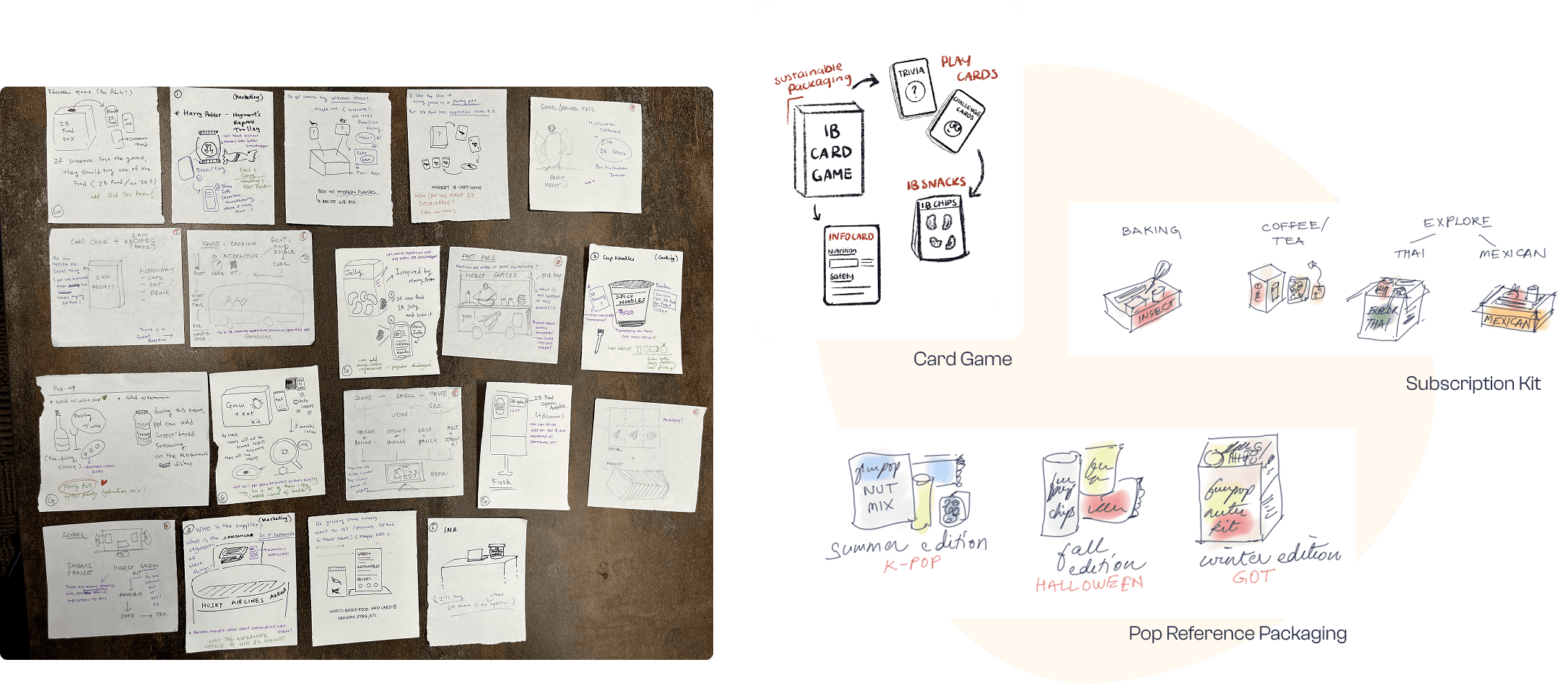
During a team sketching session, we generated over 100 original ideas. Through conceptual exploration, we sought to focus on creativity and out of the box ideas rather than perfection.
We evaluated all sketches as a team, discussing strengths, weaknesses, feasibility, and originality to identify the most promising concepts. Then we grouped similar ideas to uncover patterns and ranked them to prioritize 3 key directions. Afterwards, we re-sketched the top three ideas with added details.
Storyboarding
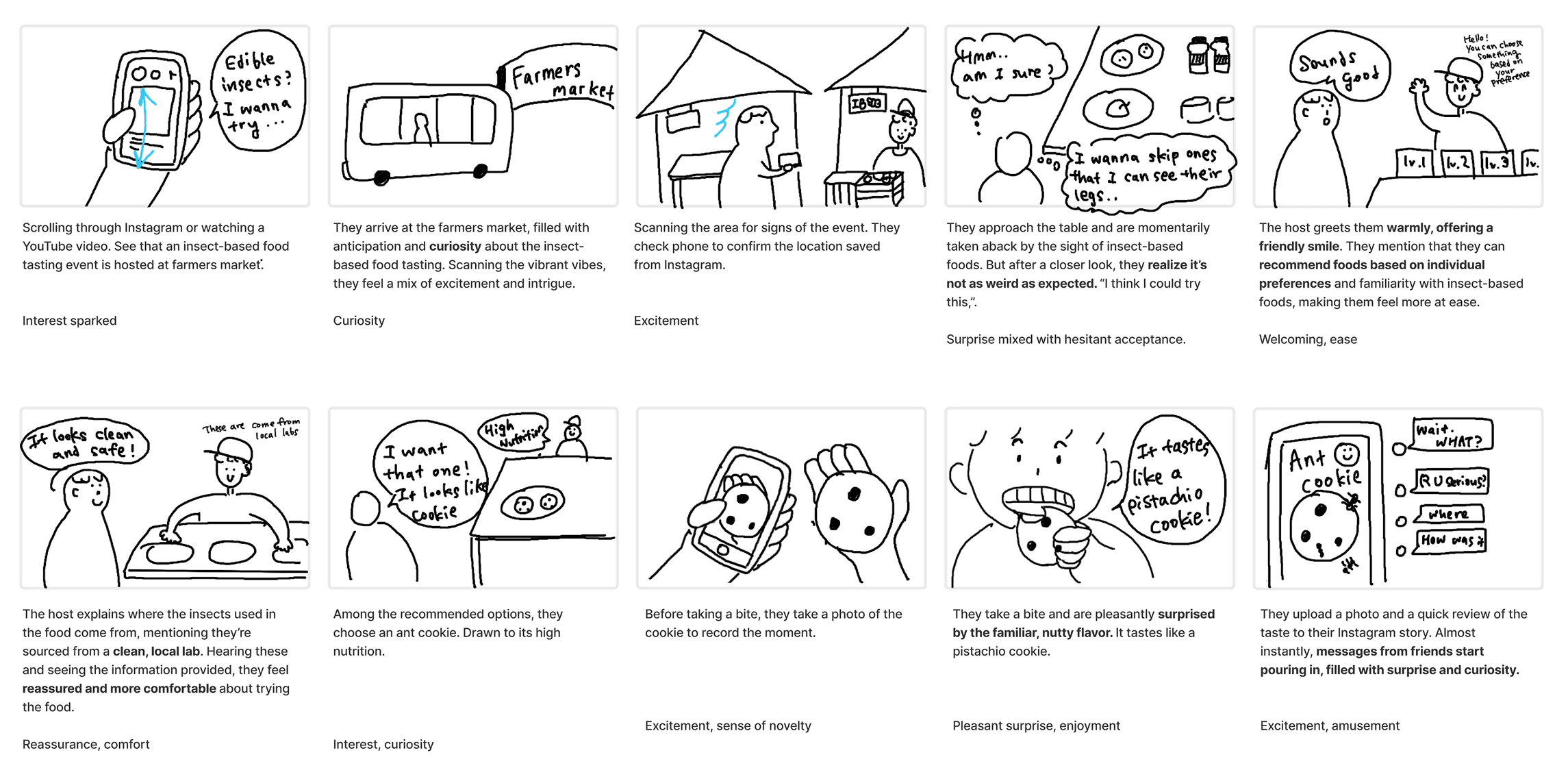
To bring our design to life, we developed scenario storyboards that depicted key use cases. Each storyboard illustrated specific situations in which users might interact with the product, showing how their needs were addressed through the solution.
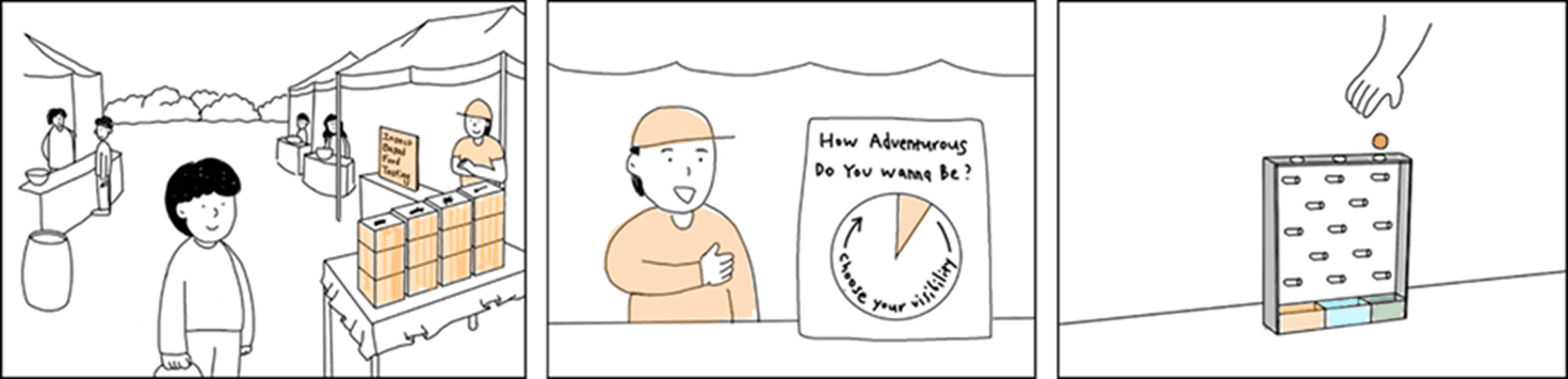
The storyboard below goes through a scenario where a user encounters insect based food for the first time at a farmer’s market. We explore the various emotions the user encounters through their journey.
User research
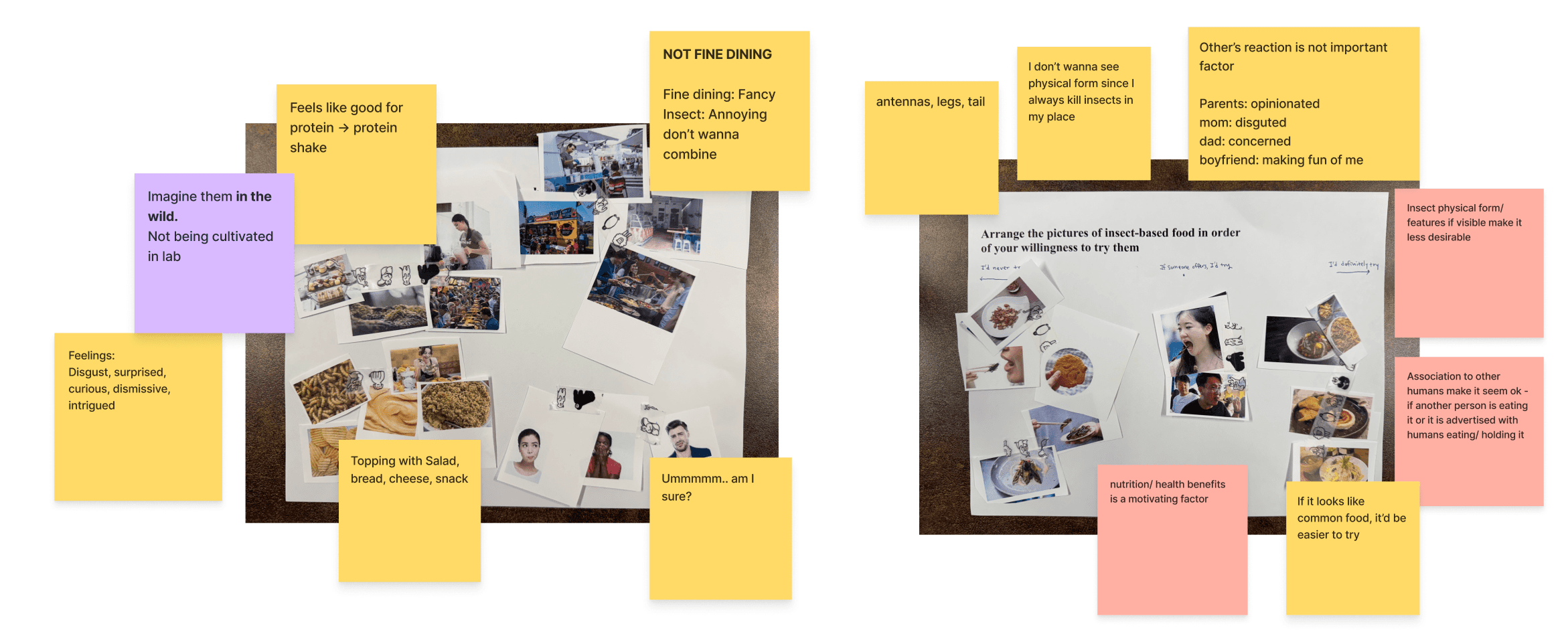
First, we conducted qualitative interviews and co-design sessions with a total of 8 participants, and gathered insights through affinity mapping.
The main pain points we discovered were:
Aversion to insect taste, texture, and visuals
Concern about sourcing and safety of insect ingredients
Limited accessibility and availability to insect based food
Design question
How might we normalize insect-based foods to overcome initial hesitation, encourage broader societal adoption and promote their adoption as a sustainable alternative in the face of climate crisis?
Design solution
Based on insights gathered through the research, ideation, and storyboards, we identified 3 key design components. After countless iterations, we created our final prototype.
1. In person tasting event
Discovering new foods can be an exciting adventure. The Bug Cube tasting events invite attendees to try insect-based foods through a fun interactive game that allows them to understand their insect based food preferences.
Overview:
Provide accessible, low-barrier entry points for curious individuals
Create initial social validation and personal experience with insect-based foods
Rationale:
Normalize through social exposure: Research showed that aversion to insect-based foods stems from unfamiliarity and disgust, which can be reduced through repeated exposure in supportive, social settings. Seeing others try and enjoy the experience increases openness and lowers hesitation.
Design low-barrier, in-person experiences: Tasting events were integrated as a core feature to provide a controlled, welcoming environment for first exposure—applying exposure therapy principles to gradually build comfort and acceptance.
Empower users through personalization and play: An openness scale and gamified Plinko selection system gave users control over insect visibility while making the experience interactive and fun. Usability testing confirmed that this combination of social validation, autonomy, and playfulness increased engagement and willingness to try insect-based foods.
2. Bug cube
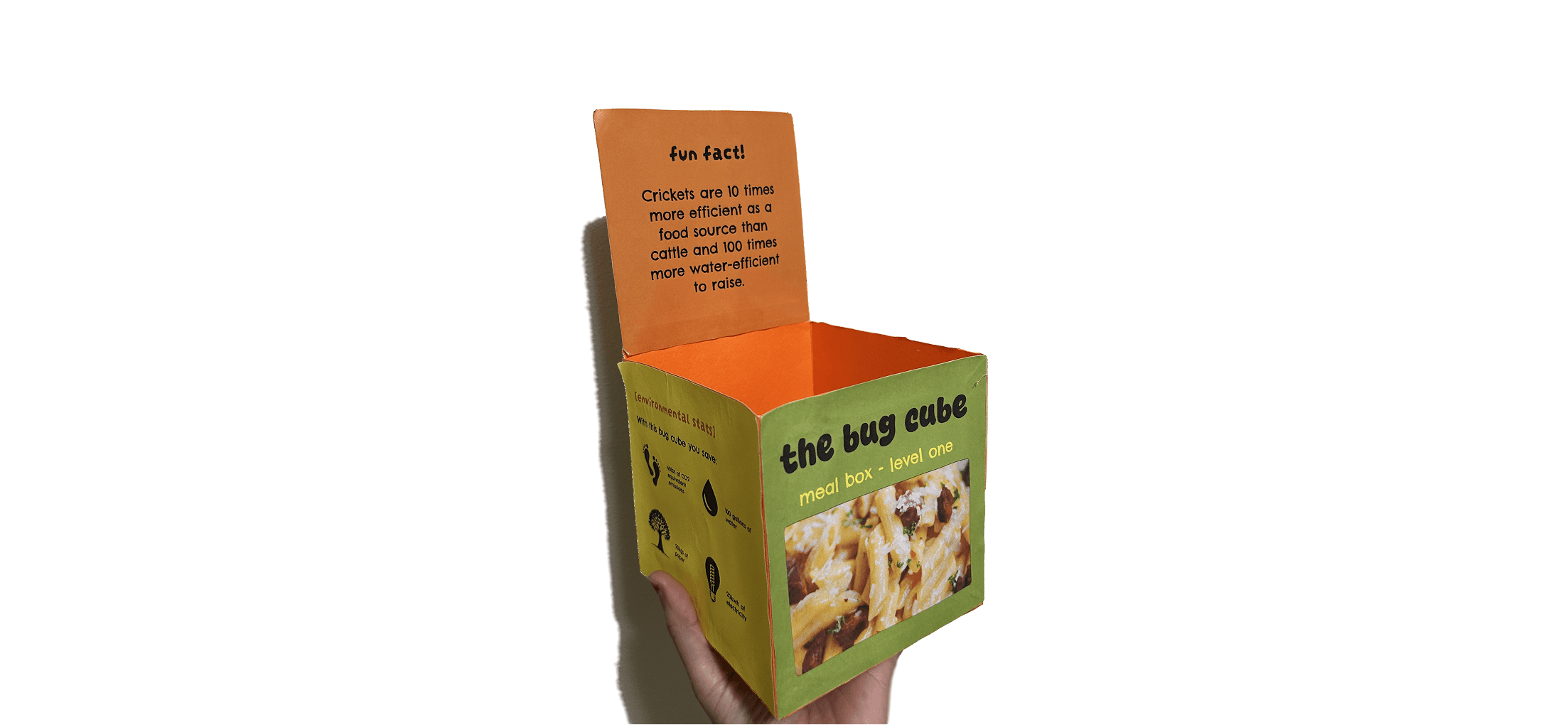
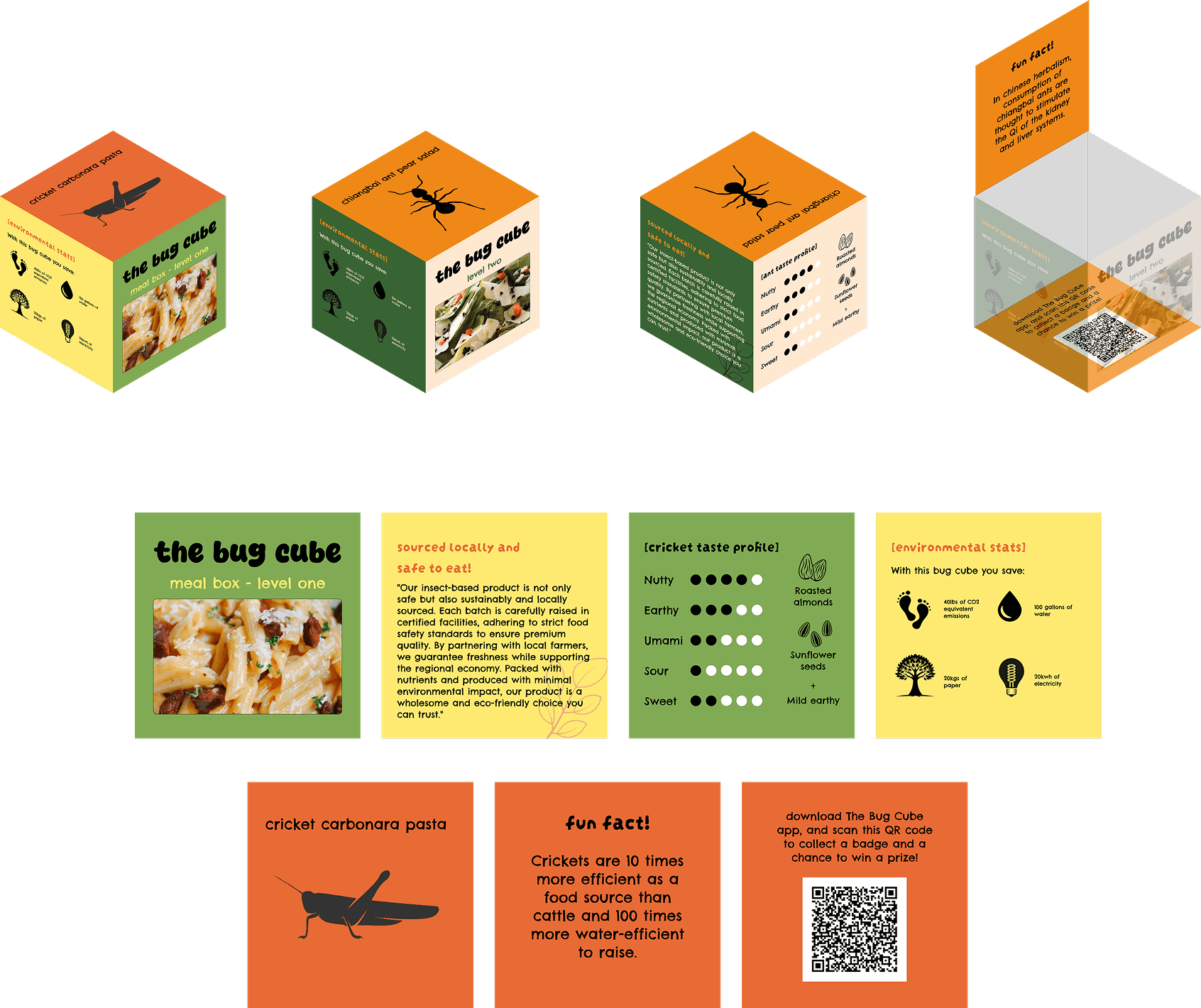
The Bug Cube food products allow people to continue exploring insect-based snacks and meals after the tasting event. This Bug Cube provides a variety of insect-based foods catering to wider preferences.
Overview:
Innovative packaging design that emphasizes nutritional and sustainability values
QR code integration for digital engagement
Approachable and visually appealing product presentation
Rationale:
Build trust through transparency: Packaging clearly communicated sourcing, processing, and safety standards (e.g., FDA approval) to address psychological resistance and reassure users that the product is safe, ethical, and high quality.
Reduce novelty through familiar comparisons: A familiarity scale compared taste and texture to known foods like nuts or protein bars, helping users bridge the gap between the unfamiliar and the familiar and lowering disgust.
Use design to improve accessibility: Playful, engaging graphics positioned the product as innovative and accessible rather than intimidating. Usability testing showed that combining transparency with familiarity cues significantly increased willingness to purchase and try the product.
3. Mobile app: The bug cube collective
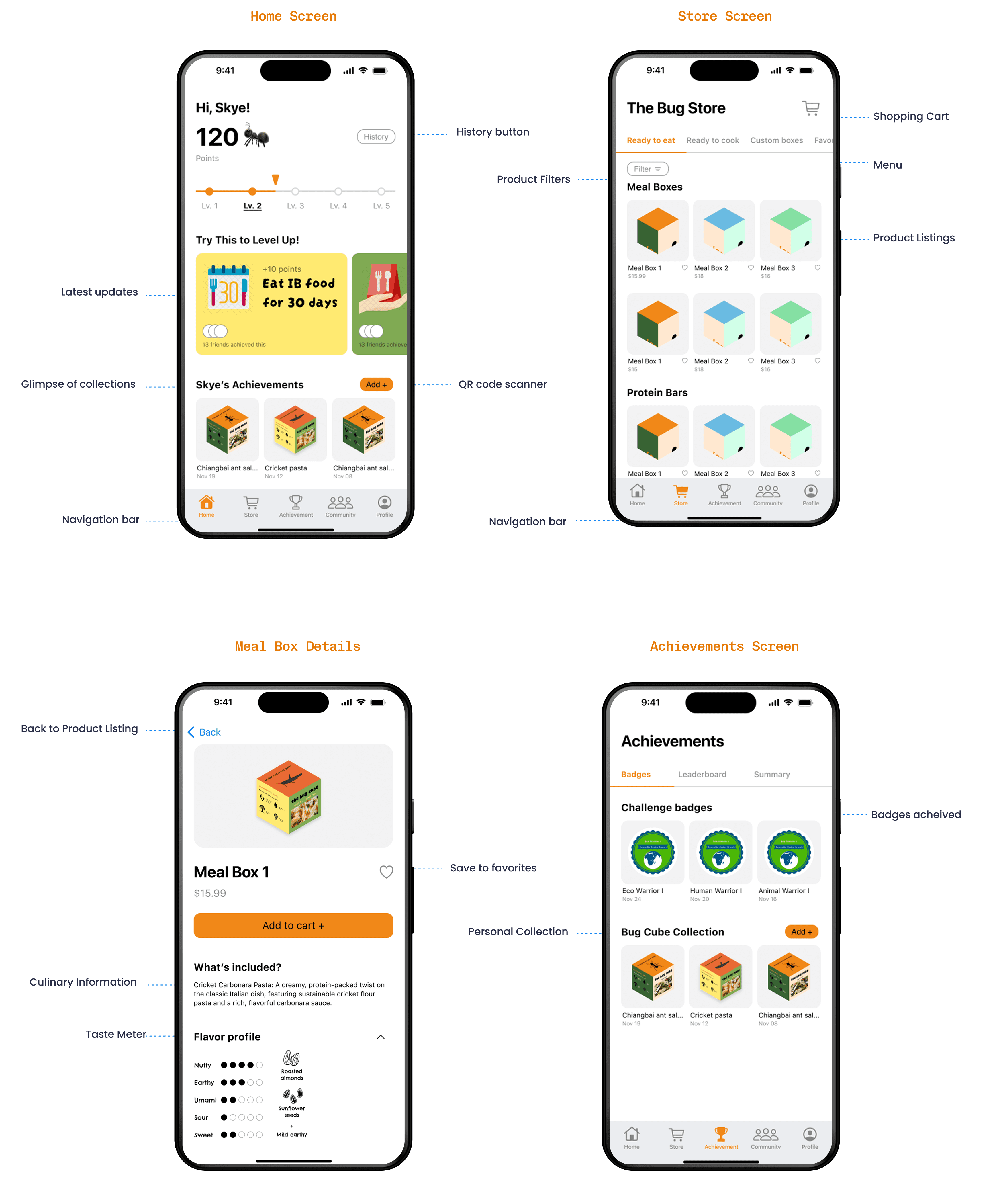
After purchasing the Bug Cube products, people can use the Bug Cube Collective app to further explore insect-based foods.
Overview:
Community platform for Insect based food enthusiasts that features:
Product showcase and scanning
Monthly challenges
Social validation mechanisms
E-commerce functionality
Host of product/food offerings
Rationale:
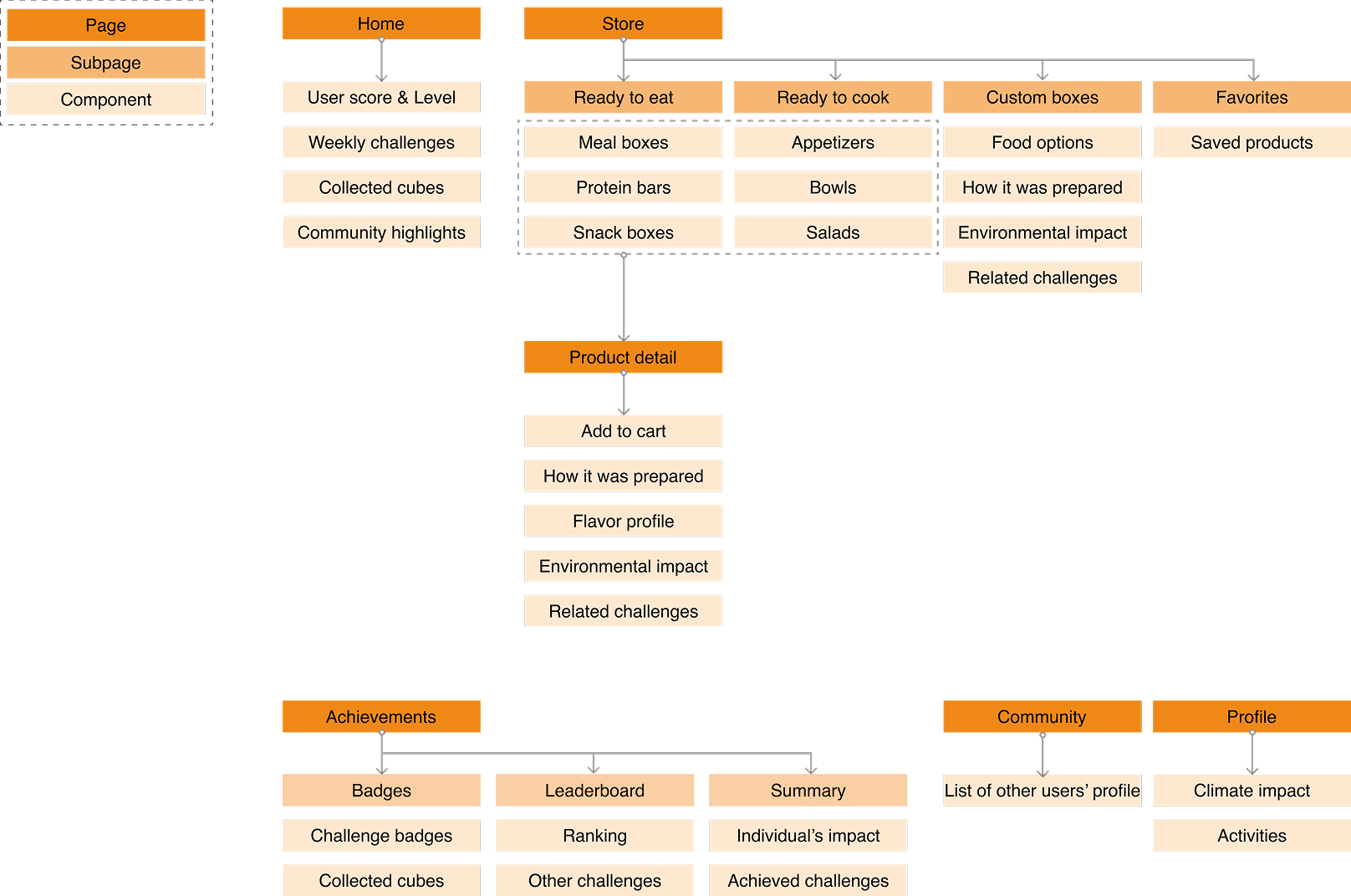
Centralize access and reduce uncertainty: The app serves as a convenient hub for discovering, purchasing, and delivering insect-based foods, addressing accessibility barriers and confusion about where to find products.
Personalize the experience: Tailored recommendations based on dietary preferences, sustainability goals, and taste profiles make the platform more relevant and approachable for each user.
Drive engagement through gamified community features: Monthly challenges, rewards, badges, and leaderboards tap into intrinsic motivations like curiosity and social recognition. By fostering community and social validation, the app helps reduce stigma and encourages ongoing exploration and sharing
Reflection
Key learnings
Reducing psychological barriers through exposure and social validation is more effective than purely educational approaches. Participants responded most positively when they could experience insect-based foods in a low-pressure, gamified, and community-driven setting.
Transparency in packaging and sourcing information made users more willing to try and purchase insect-based products, suggesting that trust-building is just as critical as taste and accessibility in driving adoption.
If I did this again…
Organized community tasting events: Create recurring touchpoints where individuals can try insect-based foods in a social setting with others who share an interest in sustainable eating.
Community forum within app: Give users a dedicated space to share their experiences, post reviews, and encourage one another in order to deepen the social validation loop to reduce hesitation
Integrated recipe and recommendation features within app: Make the platform a more comprehensive resource by helping users move beyond a first taste toward incorporating insect-based proteins into their everyday cooking and shopping habits.